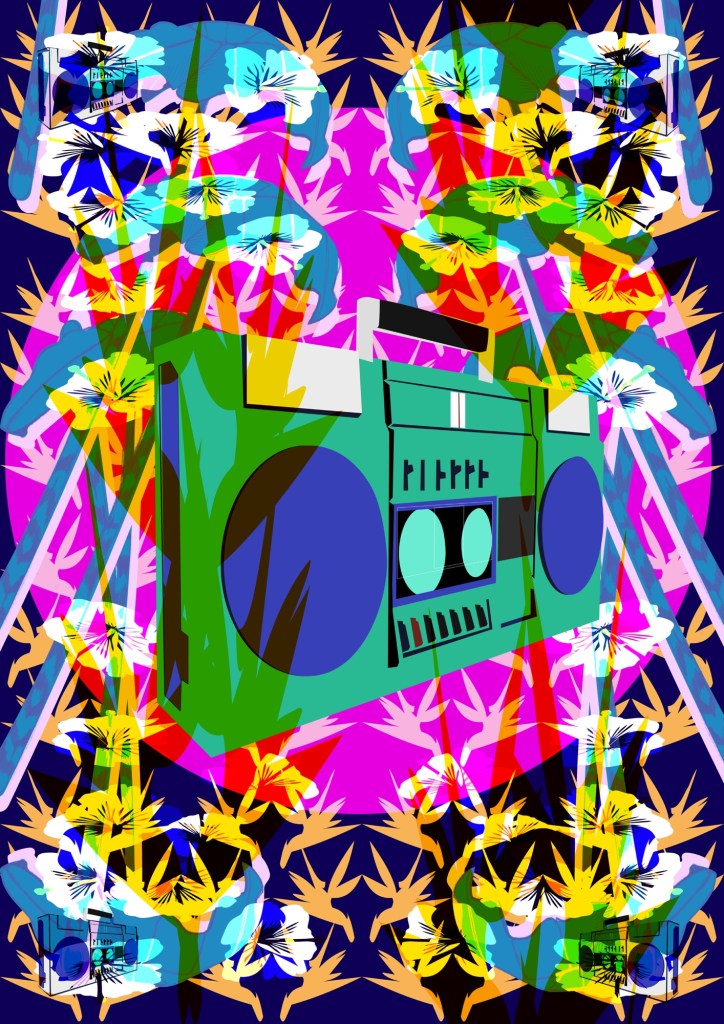
Portrait of a ghetto blaster
My fascination with the iconic ghetto blaster emanates from a deep-rooted desire that took hold in my youth. Growing up with an affinity for urban music genres such as hip-hop and R&B, the allure of possessing a portable sound system that allowed me to immerse myself in music, while sharing it with others, became an enduring aspiration. This artwork embodies that sentiment, utilizing vibrant colors to capture the euphoria and the boundless joy that the ghetto blaster represents to me, while evoking a sense of nostalgia for a time when music and community converged in the streets

The iconic ghetto blaster, also known as the boombox, holds a significant place in the history of urban culture, particularly in the 1980s. It was a portable music player, often powered by multiple batteries, featuring built-in speakers and a handle for easy transportation. Ghetto blasters were more than just a music player—they represented freedom, individuality, and a cultural revolution.
Origins:
The first boombox was developed in the Netherlands by Philips in 1969. In the United States, the popularity of these portable sound systems soared during the late 1970s and early 1980s, largely due to their association with the burgeoning hip-hop scene.
Cultural Significance:
The ghetto blaster became an emblem of urban street culture, especially in African-American and Hispanic communities. Young people would gather on street corners, breakdancing and emceeing, sharing their music and showcasing their skills. Ghetto blasters were instrumental in the rise of hip-hop and rap music, enabling artists to perform and share their work in public spaces.

Design:
Ghetto blasters were known for their large size, powerful speakers, and impressive sound quality. Some models even featured built-in equalizers, LED displays, and advanced audio features. As they evolved, manufacturers began incorporating cassette decks, and later, CD players, to broaden their appeal and functionality.
Legacy:
Today, the ghetto blaster has largely been replaced by smaller and more technologically advanced music players such as smartphones and portable Bluetooth speakers. However, the boombox remains an iconic symbol of a bygone era, evoking nostalgia for a time when music and street culture were intrinsically intertwined. Its impact on the development of hip-hop and urban culture cannot be overstated, leaving a lasting legacy that still resonates with music lovers worldwide.
What’s not to love.
 VERDANT AFRO ART
Leave a comment